
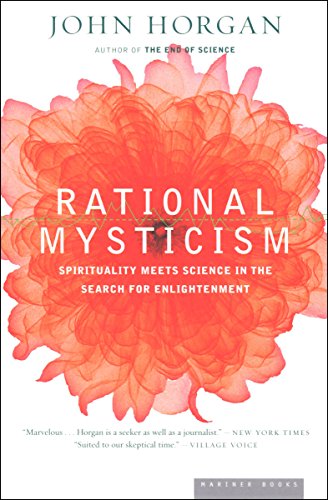
I picked up this book looking for a review of the science of mysticism and mystical experiences, which it is, however, I didn’t notice at the time that it was actually published in 2003 and is now 20 years old. So while it provides an excellent account of the state of the science of mysticism at the time, it is now quite outdated. Science tends to move quickly and in the last 20 years there has been huge progress in this field.
I was initially disappointed but I have to admit that disappointment faded quickly. Because for me the appeal of the book was not the science, it was the interviews. Each chapter focuses on a particular aspect or philosophy of mysticism through the lens of an interview with a leading expert in that field. For example, chapter 1 is about the Perennial Philosophy and features an interview with the great religious scholar Huston Smith. This is where the age of the book actually worked to its benefit. Huston and several other interviewees have since passed and this meant the book operated like a sort of time travel device that allowed me to go back and spend time with people who I greatly admire.
This is where the book really shines. John asks poignant and piercing questions trying to get to the heart of the matter. What is enlightenment? And, how can mysticism benefit average people like you and I? And he gets to ask some of the brightest minds who have ever pondered these questions. Their responses and John’s skeptical musings make up the heart of the book. Other interviewees include:
- Steven Katz, the great post-modern philosopher
- Bernard McGinn, theologian and historian of Christian mysticism
- Ken Wilber, philosopher and creator of integral theory
- Andrew Newberg, one of the first scientists to use modern neuroimaging to study mystical experiences
- Michael Persinger, inventor of the “God Machine”, a device for inducing religious experiences through electromagnetic stimulation
- Susan Blackmore, paranormal investigator turned skeptical Zen scientist and psi debunker
- James Austin, Zen Buddhist and neurologist, author of Zen and the Brain
- Franz Vollenweider, Swiss psychiatrist and the leading expert on psychedelic research at the time
- Albert Hofmann, the chemist who discovered LSD
- Stanislav Grof, early psychedelic researcher and creator of holotropic breathwork
- Terence McKenna, philosopher and psychedelic enthusiast
- Alexander Shulgin, renowned research chemist licensed by the DEA to study and synthesize new psychoactive compounds
A seriously impressive line-up that should be quite tantalizing for anyone interested in philosophy, consciousness research, mysticism, or psychedelics. Many of whom are referenced repeatedly in more modern books on mysticism. It was thrilling every time a new character was introduced and fascinating to hear their theories in their own words and to hear them relate their own mystical experiences and what they had made of them.
And John plays his part well by challenging them when appropriate, asking for clarification, and bringing in opposing opinions and data when applicable to get the most out of each interaction. He also relates some of his own experiences with altered states and psychedelics including an ayahuasca session he undertook for the purpose of writing the book.
Overall Rational Mysticism is a great introduction to the philosophy, techniques, and experts in the fields of mysticism and consciousness research. To anyone interested in the search for enlightenment this will be a fascinating and illuminating read. Even though the scientific revelations are now outdated, the interviews and questions asked are timeless, as is John’s story of his skeptical and rational nature conflicting with his search for meaning and enlightenment. That struggle is something most modern people can thoroughly relate to.
(Link to purchase: Rational Mysticism)
If that sounds interesting to you and you’re interested in picking up a copy, you can use the affiliate link above to purchase one and small portion of the money will go to me to help with the costs of hosting my website.
Thanks for reading and thank you for your support!
Love,
Justin
❤️🙏☀️