
“When you stop going to church and participating in religion then you stop joining with other people and singing with them on a regular basis, you stop having a center of your community where you all meet up and try and help others, you stop celebrating the festivals which give a sort of meaning and structure to the year, you stop praying which for many people is a great source of strength and helps them, you stop meditating, you stop going on pilgrimages because there’s no point in going on sacred journeys if you don’t believe in the sacred or the holy, you stop giving thanks before meals or expressing gratitude because there’s no one to express it to if you don’t believe in anything greater than yourself.
People who stop all those things and accept a world view that their mind is nothing more than their brain and we live in a pointless unconsciousness universe and there’s no particular meaning in anything, there’s no purpose in evolution, it’s a depressing worldview. And I think it’s no coincidence that the endemic disease of modern industrialized societies is depression.”
– Rupert Sheldrake
One of the mistakes of modernity was to accept the new atheist proposition that spirituality has no value. With the rise of industrialization and scientific progress humanity became arrogant and forgetful. We thought that because our technology is so much more advanced than previous cultures we must be more advanced in every way and we have nothing more to learn from the past. And the rise of industrialization and scientific progress have brought us many benefits and improved our quality of life in many ways, however, along with that we made the grave mistake of blindly accepting the dogmas of scientism that came along with that progress. And according to the dogmas of scientism, religion, spirituality, and spiritual practices are all worthless and the only philosophy that makes sense is nihilism. Which leaves the world devoid of meaning and purpose and leaves us longing for more.
“Atheism is a purifying fire. It burns up religious hypocrisy, corruption, laziness, and pretention. But its scorched-earth policy can leave many people spiritually hungry, thirsty, and isolated.”
- Meditation
- Gratitude
- Connecting with Nature
- Relating to Plants
- Connecting to the Past Through Ritual
- Singing, Chanting, and Music
- Pilgrimages and Holy Places
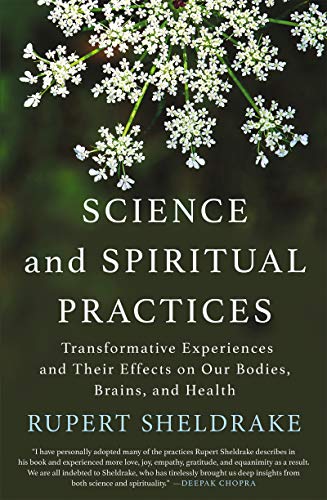
Each chapter covers one of the practices and discusses related philosophy and scientific research along with anecdotes from Rupert’s life. He ends each chapter with two recommendations for implementing the practice in our lives. This is what makes the book so powerful. He teaches us why we should do the practice, talks about how he implements it and how it benefits him, and then provides guidance on how we can make it a part of our lives as well. The chapter on pilgrimage specifically stood out to me as I have not seen that practice covered in any other books on science and spirituality.
He then ends the book with a chapter titled “Conclusions: Spiritual Practices in a Secular Age” in which he talks about the collapse of traditional religions and the decline in personal spiritual practice that went along with them. He talks about the rise of scientism, a worldview in which science itself becomes a sort of dogmatic religion. A worldview which has become increasingly popular and problematic and which has, ironically, held scientific progress back. He talks about the mistaken assumption that religions are primarily about propositions and beliefs and counters that they are actually supposed to be about experiences; a mistake that even most religious people have fallen prey to, unfortunately. And he gets to the core of spiritual practices, what they are all really about, connection.
“At first sight, the practices discussed in this book relate to very diverse aspects of human experience. What is the common thread?
Connection is the theme that unifies them all. They all lead us beyond the mundane to deeper levels of connection.”
I couldn’t agree more. And we know, from scientific research and from general human experience, that connection is what gives us a sense of meaning, and that sense of meaning is what we’re all really searching for.
(Link to purchase: Science and Spiritual Practices)
If that sounds interesting to you and you’re interested in picking up a copy of Science and Spiritual Practices by Rupert Sheldrake yourself, you can use the affiliate link above to purchase a copy and small portion of the money will go to me to help with the costs of hosting my website.
Thanks for reading and thank you for your support!
Love,
Justin
❤️🙏☀️
Very insightful! Loss of connection is already a problem and getting rid of religion would be a horrible blow to society. I agree we need purpose, place to be heard, love cared for, and prayed for. Singing together, praying together and learning and growing together brings life.